

Street vs. Track Clutch Setups: Key Differences

A clutch must transfer engine power to the transmission while giving the driver enough control to start, shift, and manage the vehicle. Street drivers usually prioritize smooth engagement, manageable pedal effort, predictable operation, and long service life. Track drivers need greater heat resistance, stronger torque capacity, faster response, and consistent engagement under severe conditions. Keep reading to understand more about the key differences between street and track clutch setups.
What Defines a Street Clutch Setup?
A street clutch must perform well during commuting, stop-and-go traffic, highway driving, and occasional spirited use. The driver may engage the clutch dozens or even hundreds of times during a single trip, so smooth operation plays a major role in comfort and control.
Manufacturers typically design street-oriented clutch systems to balance holding power with drivability. These setups may support moderate engine upgrades without making the vehicle difficult to operate in traffic.
Smooth Engagement Matters
Street driving requires frequent starts at low engine speeds. A clutch that engages too suddenly can make the vehicle jerk, stall, or become difficult to control in parking lots and heavy traffic. A street-friendly disc usually provides a broader engagement window. This lets the driver modulate the pedal and apply power gradually.
Pedal Effort Affects Daily Comfort
A clutch can increase torque capacity by using greater clamping force, but that increase may also create a heavier pedal. Excessive pedal pressure can become tiring during long commutes or congested driving. A properly matched street setup provides enough clamping force for the engine’s torque without adding unnecessary effort.
How Track Clutch Setups Handle Greater Demands
Track driving places the clutch under rapid, frequent loads. Hard launches, high-rpm shifts, aggressive downshifts, and elevated drivetrain temperatures can expose weaknesses that may never appear during normal street use.
Drivers considering aftermarket clutch kits for competition or high-performance events should focus on torque capacity, heat management, engagement speed, and consistency. A track-oriented clutch must continue transferring power after frequent abuse without fading, slipping, or changing its engagement behavior.
Heat Resistance Becomes Critical
Every clutch engagement creates friction, and friction creates heat. During a track session, frequent shifts and hard acceleration can raise clutch temperatures quickly, especially when the driver slips the disc during launches or corner exits. Track-focused friction materials can withstand higher operating temperatures than many street-oriented materials.
Fast Engagement Supports Quicker Shifts
Track drivers usually want the clutch to engage quickly and directly. A narrow engagement window can reduce the time between releasing the pedal and applying full engine torque to the drivetrain. This direct response can improve shift speed, but it also demands greater precision from the driver.

Friction Materials Change Clutch Behavior
The friction material that attaches to the clutch disc strongly affects engagement quality, temperature resistance, wear, and torque capacity. Different compounds suit different driving environments.
Organic materials generally deliver smooth engagement and controlled pedal modulation. More aggressive metallic, ceramic, or segmented materials can handle greater heat and torque, but they may engage more suddenly.
Organic Discs Favor Street Driving
Organic clutch discs provide progressive engagement, which makes them suitable for daily use. They can support many mildly modified vehicles while maintaining familiar driving behavior.
However, excessive heat can damage organic material. Repeated launches, prolonged slipping, or track sessions may glaze the disc, reduce friction, and eventually cause clutch slip.
Aggressive Materials Favor Performance Use
Ceramic and metallic friction materials can withstand higher temperatures and transfer greater torque. Their strong bite makes them useful in track cars, drag vehicles, and high-output builds.
That increased grip can make engagement less forgiving. The clutch may chatter, grab suddenly, or transmit more noise and vibration into the cabin.
Disc Design Influences Engagement and Capacity
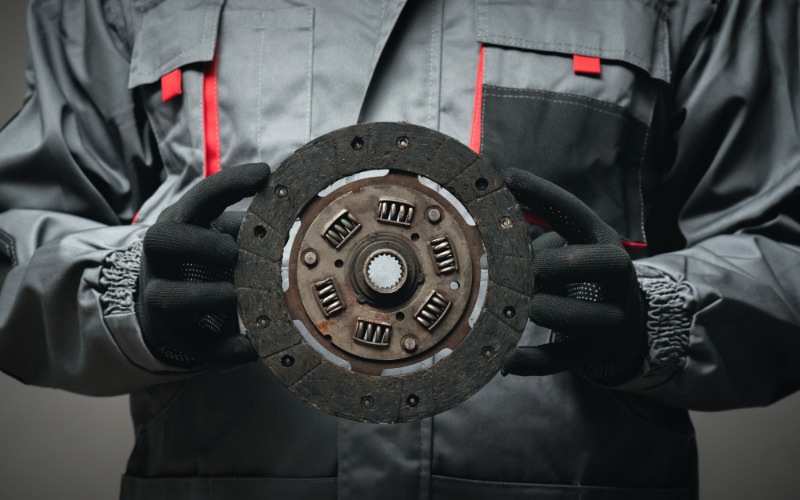
The disc design is another key difference in street and track clutch setups. Clutch discs use different shapes, hub designs, and friction arrangements to control how they transfer power. A full-face disc provides continuous friction material around its surface, while a segmented disc uses separate pads or pucks.
The correct design depends on vehicle weight, torque output, drivetrain layout, tire grip, and intended use. A lightweight car with moderate power may need a different disc than a heavy vehicle with high torque and sticky tires.
Full-Face Discs Improve Modulation
Full-face discs create a large contact area and typically provide smooth, predictable engagement. This design works well for street vehicles, touring cars, and performance builds that still need comfortable low-speed operation. A sprung hub can further soften engagement by absorbing some drivetrain shock.
Segmented Discs Provide Stronger Bite
Segmented discs reduce the amount of friction material touching the flywheel and pressure plate at one time. The focused contact areas can create a stronger initial bite and improve heat dissipation.
These discs suit aggressive driving, but they may sacrifice smoothness. Their engagement characteristics can place greater shock loads on the transmission, differential, axles, and mounts.
Single-Disc and Twin-Disc Systems Serve Different Builds
A single-disc clutch uses one friction disc between the flywheel and pressure plate. This configuration remains common because it provides straightforward operation, manageable weight, and familiar engagement.
A twin-disc system adds another friction disc and an intermediate plate. The additional friction surfaces increase torque capacity without requiring an extreme increase in pressure plate clamping force.
Single-Disc Setups Keep Things Simple
Many street cars perform well with a suitable single-disc clutch. The setup can provide reliable holding power while preserving smooth engagement and reasonable pedal pressure. As engine torque increases, a single-disc system may require more aggressive friction material or greater clamping force.
Twin-Disc Setups Increase Surface Area
A twin-disc clutch distributes torque across more friction surfaces. This design can support substantial power while maintaining a more manageable pedal than an extremely aggressive single-disc setup. Twin-disc systems can work in street or track applications, depending on their materials and construction.
Flywheel Selection Changes the Driving Experience
The flywheel stores rotational energy and provides a friction surface for the clutch disc. Its weight influences engine response, launch behavior, shifting, and drivability.
A heavier flywheel stores more energy, which can help the engine maintain momentum during starts. A lighter flywheel allows the engine to change speed more quickly, which may improve throttle response.
Street Cars Benefit from Stability
Street-oriented vehicles can benefit from a flywheel that preserves enough rotating mass for smooth starts and predictable low-speed behavior. The additional stored energy can reduce the likelihood of stalling when pulling away from a stop. A balanced flywheel choice can still improve responsiveness without making the car difficult to operate.
Track Cars Prioritize Response
A lighter flywheel can help the engine rev and decelerate more quickly. This response may support faster shifts, sharper throttle changes, and more precise engine speed matching during downshifts.
Reduced flywheel mass can also make launches less forgiving. The driver may need to use more throttle or manage the clutch more carefully to prevent the engine from bogging.
Choose a Clutch for How You Drive
A street clutch should provide smooth engagement, comfortable pedal effort, predictable operation, and enough capacity for the vehicle’s power level. A track clutch should manage greater heat, frequent shock loads, rapid shifts, and sustained high-torque operation.
Clutch Masters can help you compare clutch materials, disc designs, flywheel options, and torque capacities for your specific build. Contact Clutch Masters to find a setup that supports your power level, driving style, and performance needs.