

Why Choosing the Right Master Cylinder Bore Size Matters
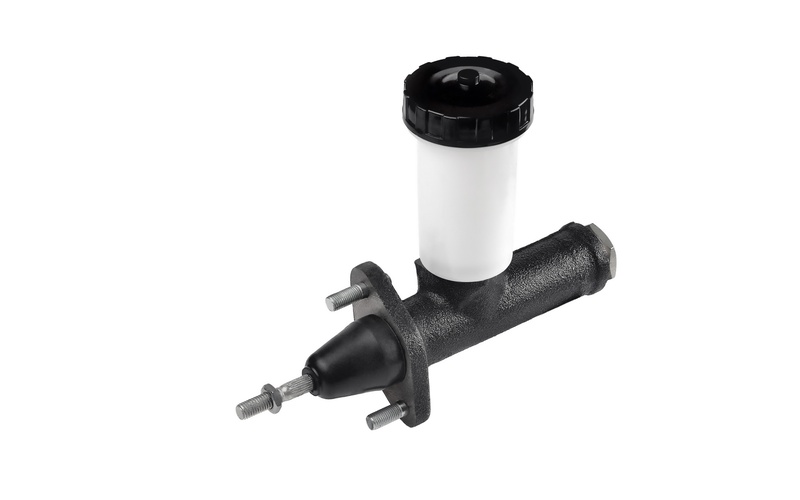
You spend thousands on engine upgrades, suspension tuning, and sticky tires to shave tenths of a second off your lap times. Yet, you might be overlooking one of the most critical components in your vehicle’s control system. The connection between your foot and the mechanical action of your clutch or brakes defines your driving experience. This connection relies entirely on the master cylinder.
Many enthusiasts treat the master cylinder as a "set it and forget it" component and replace it only when it leaks. However, understanding the science behind master cylinder bore size unlocks a new level of tuning. Keep reading to understand why choosing the right master cylinder bore size matters and how to select the right one for your vehicle.
Understanding the Master Cylinder
The master cylinder serves as the heart of your vehicle's hydraulic system. It converts the mechanical force from your foot on the pedal into hydraulic pressure. When you press down, a pushrod forces a piston within the cylinder bore forward. This movement pushes hydraulic fluid through the lines to the slave cylinder (for clutches) or calipers (for brakes).
This component relies on simple hydraulic principles. Since liquids do not compress, the force you apply at one end transfers directly to the other. The master cylinder dictates the characteristics of this transfer. It acts as the command center, determining how much fluid moves and at what pressure.
While the concept seems simple, the internal geometry plays a massive role in performance. The relationship between the input force and the output work depends entirely on the dimensions of that internal piston.
The Significance of Bore Size
Bore size refers to the inner diameter of the cylinder through which the piston moves. This measurement creates a specific trade-off between pressure and volume. A smaller bore generates higher pressure with less input force but displaces a smaller volume of fluid for every inch of stroke. Conversely, a larger bore displaces a larger volume of fluid but generates lower pressure for the same input force.
This trade-off directly alters pedal feel. You must move enough fluid to disengage a clutch or fully engage brake pads, but you also need to generate sufficient pressure to do the work. If you change the bore size, you shift the balance of this equation. You essentially choose between a pedal that feels soft and travels farther and one that feels firm and travels shorter distances.
Effects of Choosing an Incorrect Bore Size
Choosing the right master cylinder bore size matters greatly, as the wrong one can cause significant problems in your vehicle. Since a smaller piston moves less fluid per inch of stroke, you must push the pedal further to achieve the same amount of work. In a clutch system, this can cause the pedal to hit the floor before the clutch fully disengages. This grinds the gears, makes shifting difficult, and accelerates the wear on synchros. While the pedal might feel light and easy to press, the excessive travel makes quick shifting impossible.
On the other hand, choosing a bore size that is too large creates the opposite effect. A large piston moves a large volume of fluid quickly, making the pedal travel incredibly short, typically engaging or disengaging the system with a single tap.
However, the trade-off is pedal effort. You might feel like you are doing leg presses at the gym to hold the car at a stoplight. This stiffness reduces your ability to modulate the pedal. In a racing scenario, a rock-hard pedal lacks the feedback necessary for smooth launches or precise braking, which can stall engines or lock wheels.
Factors to Consider When Selecting a Size
Several variables influence the correct bore size for your specific build. You must first consider the vehicle's intended use. A daily driver stuck in stop-and-go traffic benefits from a slightly smaller bore that reduces leg fatigue. A track car will typically utilize a larger bore to minimize pedal travel and enable lightning-fast shifts.
You also need to evaluate the vehicle's weight and the mechanical advantage of the pedal assembly. A heavy car generally requires more force to stop or shift, which affects the necessary hydraulic assistance. The pedal ratio, which is the geometric leverage your pedal provides, works in tandem with the master cylinder. A high pedal ratio provides more mechanical leverage, potentially allowing you to run a larger bore size without making the pedal too stiff.
Finally, consider the components on the receiving end of the hydraulic line. The slave cylinder or brake calipers have their own piston sizes. The ratio of the master cylinder area to the slave cylinder area defines the hydraulic ratio. You cannot select a master cylinder in isolation; it must hydraulically match the rest of the system.
Matching the Master Cylinder to the System
Achieving optimal performance requires mathematical precision. You need to calculate the total piston area of your slave cylinder or calipers. If you install a massive aftermarket hydraulic release bearing with a large surface area, a stock master cylinder might not move enough fluid to actuate it effectively. You would need to upgrade to a larger-bore master cylinder to compensate for the increased fluid volume the new bearing requires.
Many professional builders use a ratio chart or a brake bias calculator to dial this in. For clutch systems, the concept remains the same. You want a hydraulic ratio that allows complete disengagement within a comfortable pedal travel range. A master cylinder that is too aggressive for the slave cylinder can blow out seals or cause hyperextension, while a weak master cylinder results in a lazy, ineffective system that fails to handle the power of a high-performance engine.
Upgrading for Performance and Reliability
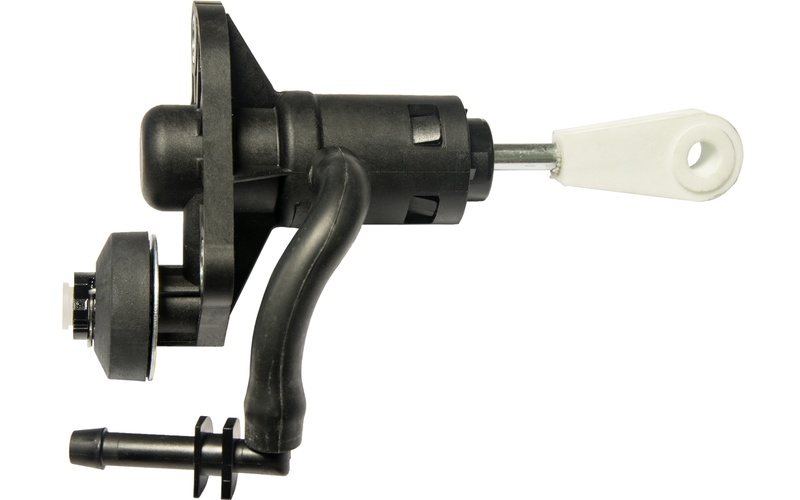
Once you understand the math, you need high-quality components to execute the upgrade. Stock components work well for stock cars, but they rarely handle the abuse of drag racing, drifting, or circuit tracks. Upgrading the master cylinder boosts your hydraulic system to keep up with aggressive driving styles.
You should also address the lines connecting these components. Factory rubber clutch lines expand under pressure, much like a balloon. This expansion absorbs some hydraulic force, resulting in a spongy pedal feel that mimics air in the lines. Replacing this with a Clutch Masters stainless steel braided line eliminates that expansion. The stainless steel braid directs hydraulic pressure directly to the slave cylinder, resulting in immediate, consistent actuation.
Enhance Your Vehicle with Clutch Masters
The master cylinder dictates the conversation between the driver and the machine. Ignoring bore size can create a disconnected, sloppy, and physically exhausting driving experience. By understanding the relationship between pressure, volume, and pedal feel, you make informed decisions that enhance control.
You must weigh factors such as vehicle purpose, pedal ratio, and slave-cylinder specifications to achieve the optimal balance. Upgrading to high-quality hydraulic clutch parts like the Clutch Masters X Wilwood cylinder and stainless steel lines ensures the reliability of your car’s hydraulic system lap after lap. Take control of your vehicle’s performance and explore the full range of hydraulic solutions at Clutch Masters Industries today.